
Passion of the Weiss

The Old Testament: Fela Kuti

January 30th, 2008

felab.jpg

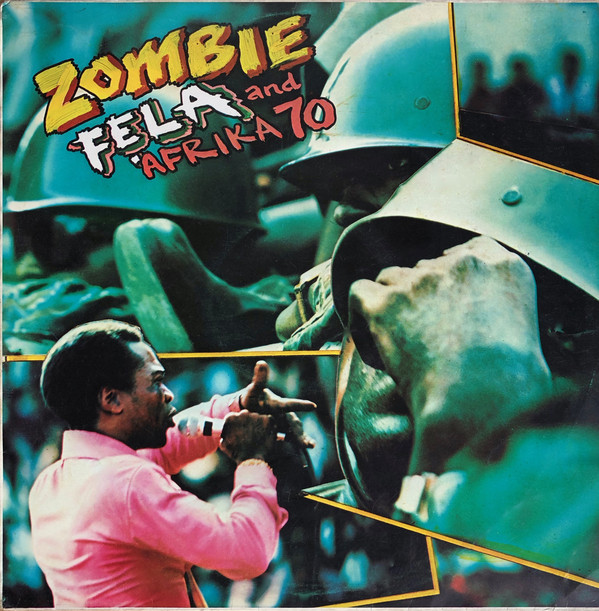
I haven’t wanted to listen to anything but Fela Kuti for weeks. It’s getting a little weird. In the car, Expensive Shit/He Miss Road has monopolized my stereo. and at home, rather than feebly attempt productivity, I’ve burnt countless hours scrounging around miscellaneous legally dubious corners of the web vainly attempting to acquire his entire discography. This isn’t the first time I’ve been on a Fela kick either. When I bought Expensive Shit, a few years back, I had a nice few weeks driving around Los Angeles, letting the afro-beat horns shower my eardrums with a soft copper rain and occasionally doing my best white-boy afro chants along with Fela (it wasn’t pretty, we’ll leave it at that.).

But this obsession is different and I’m not quite sure what to ascribe it to. Maybe it’s that after having pretty much ignored jazz for my first 26 years of living, I’ve been listening to a lot of it over the past few months, digging (I believe this is the only suitable verb) Miles, Coltrane, Andrew Hill, Mingus, Pharoah Sanders, and Tony Williams, among others. Or maybe it’s the way in which Fela’s hypnotic, afro-beat contains a protean quality that’s mirrored Los Angeles’ schizophrenic weather of late; with violent storms passing with almost tropical impatience, thundering for an hour or two and breaking into pale unbroken sky and bright, cold sun.

I guess it’s this sort of duality that makes Fela’s so music so compelling. It sounds like the music of a man who’s seen both heaven and hell, a wounded triumphalism suffused with radiance and pain, ecstatic vision and plaintive sorrow. There’s an atavistic wisdom there, the beatific notion that no matter what happens, transcendence is available at a slick burst of rainbow-colored keys and a golden wail of saxophone peals that twist towards the sky. Every culture’s got its own myths, a different path to that hazy notion of transcendence, and for me, Fela’s music is the Nigerian manifestation of god (well, that and Hakeem “The Dream” Olajuwon).

Cooler Than A Polar Bear’s Toe Nails

fela.gif

Such praise would be hyperbole were it lavished upon anyone else, but when you factor in the details of Fela’s Greek Tragedy existence, his music gains an added resonance. Inspired by the Black Panthers, whom he encountered during a short stay in Los Angeles at the tail-end of the 60’s, Fela’s music is rooted in a sense of struggle and resistance. When the immigration authorities deported him back to Africa, Kuti re-christened his backing band, Africa ‘70 and sought to impart this new-found philosophy into song. Building himself a compound (The Kalakata Republic) that was part commune, part disco and part recording studio, Fela declared himself independent from the Nigerian state and married 27 woman. Sort of like Brigham Young, if Brigham Young were really cool. Naturally, his ideology flew contrary to the corrupt military dictatorship then ruling Nigeria (not like Brigham Young), and when you factored in Fela’s wild popularity, he was bound to draw static.

The shit went down (literally) in 1974 when the police raided his compound, hoping to plant a joint on him and frame him on drug charges. Wisely, Fela immediately grabbed the J and swallowed it, leaving the fascists dumbfounded. Beside themselves, the army officers hauled Fela into prison anyway and waited for him to shit out the joint, only for him to switch feces with another prisoner and walk off scot-free, mocking the government in song months later. A song, oh so subtly entitled, “Expensive Shit.”

The most toothless cliche around is the notion of the “brave artist.” Most recently, a spate of newspaper eulogies used the phrase to describe Heath Ledger and as much as I like “10 Things I Hate About You” the notion of bravery being defined as an actor playing a gay cowboy seems pretty laughable. Bravery is releasing an album called Zombie (no Cranberries) , flipping the metaphor to indict the repressive savagery of the Nigerian Army, watching them come to your disco crib with 1,000 blood-thirsty soldiers and throw your elderly mom fatally out of a window, while barely escaping death yourself. Bravery is delivering your dead mother’s coffin to the main army barrack in Lagos, and writing two hit songs, “Coffin for Head of State” and “Unknown Soldier,” about the ordeal.

Does This Guy Know How To Party Or What?

wamba01.jpg

Among the music-nerd world. Fela’s a pretty well-known commodity, but in the world o’ the normals, the name Fela Kuti is more likely to be confused with an imaginary disease you may or may not have acquired from a girl in the first grade. That’s a shame. If anyone deserves the lucrative world of dorm room martyrdom a la Bob Marley, it’s Fela. If you haven’t heard him, there’s a sampler below. It’s good stuff, I promise. In the meantime, I’m going to start google searching for hotlines to wean me from this addiction. Do they use methadone for this sort of thing?

Download:

From The 1969 Los Angeles Sessions
MP3: Fela Kuti-”My Lady Frustration” (Left-Click)

From Live! (With Ginger Baker) (1971)
MP3: Fela Kuti-”Let’s Start” (Left-Click)

From Expensive Shit (1975)
MP3: Fela Kuti-”Expensive Shit” (Left-Click)

From Everything Scatter/Noise For Vendor Mouth (1975)
MP3: Fela Kuti-”Who No Know Go Know” (Left-Click)

From: Upside Down/Music of Many Colours (1976)
MP3: Fela Kuti-“2000 Blacks Got To Be Free” (Left-Click)

From Zombie (1977)
MP3: Fela Kuti-”Zombie”

  Digg!

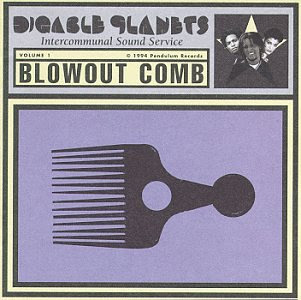
The Old Testament: Digable Planets-Blowout Comb

June 7th, 2007

“Cool Like Dat,” Digable Planet’s breakout single, was inescapable in winter of ‘92/93. From top 40 radio airplay to its black and white video that played constantly on MTV, the Brooklyn Bohemians fit perfectly into the left-of-center aesthetic that that hip-hop seemed evolving towards. From Tribe Low End Theory’s appropriation of jazz to Guru’s Jazzmattaz dabbles, to novelty hits like US3’s “Cantaloop”, jazz rap was having its moment in the sun. As was eccentric behavior of all sorts, as weird collectives like Arrested Development and Digital Underground could manage to sell millions of records talking about playing horseshoes in Tennessee and virtual sex packets.

In this receptive environment, Digable flourished, going gold with their debut, 1993’s oddly named Reachin’: A New Refutation of Time and Space. Arriving three years prior to the Fugees, Digable’s success established a blueprint for conscious co-ed hip-hop and did so without having to bring Wyclef Jean into the world, something the world has yet to recover from (or least those that heard Ecleftic). But by the time, the notoriously erratic trio issued their sophomore effort, Blowout Comb, in October of 1994, the zeitgeist had shifted radically.

Mellow, peaceful progressive-leaning rap was out. Bleak nihilism was in and NYC hip-hop took a turn to the dark side, as Biggie, Nas, Wu and Mobb Deep’s gritty noirish sensibilities became all the rage. Consequently, Blowout Comb was met with a tepid reception, both critically and commercially, with Digable dismissed as quintessential one-hit wonders, a group that managed to capitalize on a passing trend, seemingly destined to recede forever into an abyss of trivia questions and vague nostalgia. Which is too bad, because in retrospect, it’s one of the greatest albums in hip-hop history.

Digable Planets: Seen Here Trying To Figure Out the Meaning of their Name

Several bloggers took some easy jabs at the predictability of the 25 best hip-hop albums list that Joey and I compiled last month. Fair play. But what got lost in the discussion was the fact that the process got a whole lot of people talking about albums they hadn’t thought about in years, forcing everyone to dig up a bunch of great records from the crate and re-evaluate them a decade after their original release. In particular, Blowout Comb caught my eye, earning placement on Joey and Scott Sterling’s Best Of lists. Not to mention, Gorilla Vs. Bear’s placement of it as his all-time favorite. While it garnered nowhere near enough points to crash the official list, it still got enough love to cause me to finally get a hold of an album I’d somehow never managed to hear, as its mixed reception had always led me to wrongly believe that it was somehow a bad record.

Finally listening to Blowout Comb, it’s not hard to understand why the record bombed commercially. Devoid of a single as relentlessly catchy as “Cool Like Dat,”and saddled with a half dozen 5-minutes plus tracks, Blowout Comb is almost proggish in its meandering, conceived with little regard for monetary concerns. Instead of looking for a quick fix summer jam, Digable indulged their inner jazzman, bringing in live instrumentation for extended solos backed by strong, slick raps. At times, the record feels like what you’d expect if A Tribe Called Quest and The Roots collaborated, smoked a half dozen blunts and let their freak flags wave high. In other words, it’s incredible.

Guru drops science on “Borough Check,” the Brooklyn-trumping re-working of Roy Ayers’ “We Live in Brooklyn, Baby” (later re-sampled by Mos Def on Black on Both Sides), but the album is mostly devoid of guest appearances, as the trio spits eloquently written and subtle political rants over an array of silky-smooth self-produced beats. Distinctly out of its time, Blowout Comb seems to exist in a Brooklyn-centric universe of shadows and diamond heists, speakeasies and slang. Remarkably consistent and fluid, the record lilts with an elegance and grace foreign to most hip-hop. Just in their twenties at the time of its release, Blowout Comb sounds remarkably mature, a confident artistic statement just as anachronistic in its own time as it is today. An unsung classic, it’s the perfect fit for any blowout.

Download:
MP3: Digable Planets-”Black Ego”
MP3: Digable Planets-”Borough Check”
MP3: Digable Planets-”The Art of Easing”

  Digg!

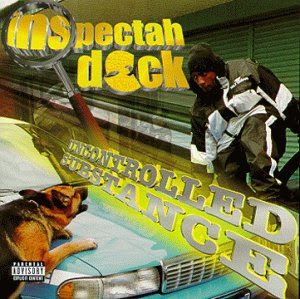
The Old Testament: Inspectah Deck-Uncontrolled Substance

May 17th, 2007

On the surface, it would seem tough to be Inspectah Deck. Sure, there’s that whole fame-and-fortune thing, but let’s be real, it has to hurt a bit that that most people consider him at best the fourth or fifth-best rapper in the Wu. Not nearly as emotionally resonant and vocally complex as Ghost, lacking the shimmering fluidity of Meth or the scientific intricacies of the Genius, it’s better to think of the man born Jason Hunter as you think of the man who he took his nickname from, Rollie Fingers: one of the greatest closers in history. The sort of guy you want facing the opposing team’s power hitter in the 9th with hard lights-out fastballs or 16 bars of controlled but forceful raps.

It was this fireman brilliance that made Deck stand out in the first place. Whether it was the 45-second Wu mission statement on the first single, “Proteck Ya’ Neck,” or the scene-stealing on “C.R.E.A.M,” Deck’s turns were the stuff of legend. Leading up to his 1999 solo debut, the erstwhile Rebel I.N.S. had already blazed the intro from “Guillotine (Swordz),” to the “chrome dipped lyrics known to split stone” of Big Pun’s “Tres Leches,” to the god-body 16 of “Above the Clouds,” where flanked by Premier’s ethereal bass lines and rattling dusty drums, he annihilates Guru. And of course, there was the jaw-dropping verse on “Triumph” often picked as the greatest Wu-Tang verse ever. Needless to say, expectations for Uncontrolled Substance were high. [Insert gong noise here]

There was only one problem. The album didn’t exist. It was supposed to. Hell, rumors claimed that the thing was finished in ’95. Finally, as the millennium neared, a deal with Priority was finally locked down and a release date set. Except late ’99 was a fitting release date for the man whom RZA described as: “the person you see that’s never there, that guy that lurks in the shadows.”

Inspectah Deck: Finger Licking Good

“Never there” being the operative phrase, as Uncontrolled Substance emerged following a wave of mediocre Wu-affiliate albums (Sunz of Man, Killah Priest, Cappadonna), and in the midst of a seven-month period that saw seven Wu solo albums released between June 1999 and January 2000. With Raekwon’s insanely anticipated, insanely disappointing Immobilarity dropping a mere two weeks after it, Uncontrolled Substance registered little critical or commercial reaction and was quickly overshadowed in Wu circles when Ghost dropped Supreme Clientele a mere two months later.

Looking back at Deck’s much-delayed debut, eight years after the fact, illustrates most of all, the RZA’s impact in shepherding the Wu’s projects. Unlike the first round of classic solo albums, Deck’s record dropped after the RZA had ended his five-year plan of master-minding all Wu-Tang projects. Letting Deck run things meant less guest verses from the other Clan-members, less RZA beats, and the absence of the cinematic narratives that made Only Built 4 Cuban Linx, Liquid Swords, Tical, and Ironman indelible.

In that vein, Uncontrolled Substance is a second-tier album, hampered by the absence of any and all memorable guest appearances. No vivid “drinking rum out of Stanley Cups” imagery from Ghostface, no “Ice Cream” hook from Meth, no Scarface references from Rae. Just a few Masta Killa and U-God bars and Wu weed carrier appearances, including one from La the Darkman more boring than the Liam Neeson movie, Darkman. Despite Deck’s well-constructed verses and supreme technical mastery, the album possesses little balance and little flow, filled with lyrically empty gun talk and boasts, albeit brilliantly constructed, slang-heavy, well-rapped empty boasts.

But Have Inspectah Deck and Sir Smoke-A-Lot Ever Been Seen in the Place at the Same Time?

When removed from its album context and placed in shuffle, though, each song off Uncontrolled Substance is fairly solid, with a half-dozen great ones thrown into the mix. In three to four minute doses, Deck more than succeeds, penning hard-charging throwback joints like “R.E.C. Room,” the sex romp “Forget Me Not,” which oddly and wonderfully samples Half Baked’s Sir Smoke-A-Lot, the twinkling keys of “Elevation,” and the brassy swagger of the title track.

But stretched out over 17 tracks and an hour and six-minute run, Deck doesn’t have the steam to carry an album on his own, better off in the bullpen, throwing fewer pitches and cutting loose in the ninth. In spite of his solo shortcomings, Deck remains one of the finest rappers of the ‘90s. So what if his best work came in the context of the team game? After all, closers are only important on winning teams. Go ask Rollie Fingers.

Originally Published at Stylus

Download:
MP3: Inspectah Deck-”R.E.C. Room”
MP3: Inspectah Deck-”Show N’ Prove”
MP3: Inspectah Deck-”Forget Me Nots”

  Digg!

The Old Testament: The Pharcyde-Bizarre Ride II The Pharcyde

March 14th, 2007

A few months ago, I was writing something with a writing partner, a very witty and intelligent girl, who for one reason or another just isn’t into music. The scene in question, called for a bunch of young women caking on make-up in a room, and we were looking for the right song to soundtrack the scene. Naturally, I was stumped. That’s not a situation I find myself in often and I certainly had no idea what girls play when they’re getting ready. James Blunt? Kelly Clarkson? Abba? Then my writing partner suggested “Passing Me By.”

At first, I blanched. A bunch of girls throwing on lip-liner would never rock out to The Pharcyde. But she insisted: it really happened. Ultimately, what struck me most about the exchange wasn’t the idea that a bunch of presumably hip-hop ignorant girls would listen to the Pharcyde, but more the extent of how much people loved that song (and Pharcyde’s brilliant debut, Bizarre Ride II The Pharcyde.)

Featuring one of the most iconic album covers in hip-hop history, the gonzo spirit of the Pharcyde is aptly captured at first glance as the album is an amalgam of bright colors, screams, thrills, fun-house lyrical contortions and just straight-up hilarity. A 56-minute-long bizarre ride., featuring the Los Angeles-based quartet of Tre, Fatlip, Booty Brown and Imani Wilcox, a West Coast version of De La Soul, focused less on ethereal abstractions than playful observations filtered under the analysis of strong drink and powerful narcotics.

Please For The Love of God, Someone Make These Guys Get Back Together

From the first song, “Oh Shit,” you know you’re in for a surreal journey, as the group spins a strange tale about accidentally picking up a tranny, taking her/him to the beach and horrifyingly realizing that her feet were much much too long, as this “ho turned out to be a…John Doe.” From there, the album is extremely consistent, laced with funny skits and creative well-constructed songs. Tracks like “Soul Flower (Remix”) finds them riding samples from The Fatback Band and name-dropping Menudo. Recorded shortly before the LA riots broke out, “Officer” tackles the Draconian tactics of the LAPD, and serves as a comical (but ultimately serious-minded) take on police brutality, that seems a stark contrast from LA peers like NWA, Snoop and Above the Law.

If Digital Underground were neo-Funkadelic, The Pharcyde were a neo-Sly and the Family Stone, a deranged collective that coalesced for a brief period of brilliance, only to come unhinged under the influence of far too many drugs (the source of the the group’s break-up was rumored to be Fat Lip’s crack problem, while producer J-Swift had to drop off the debut due to his own substance abuse troubles). Tracks like the trippy, deranged “Pack the Pipe,” don’t do much to dispel that theory either, as Fat Lip’s helium voice twists and soars like an over-inflated balloon ready to pop, with lyrics about, you guessed it…packing the pipe. And I won’t get into the sheer awesomeness that is “Quentin’s On His Way,” a two-minute sing-a-long leading into “Pack the Pipe,” that celebrates the fact that indeed, Quentin is on his way, and therein, everyone can get high.

As for the production, it’s rock-solid and very much a product of its sample-heavy time. Nearly every track features a spiraling jazz loop or a funky drum-break. Among the artists sampled include Donald Byrd, Lou Donaldson, James Brown, The J.B’s, The Meters, Jimi Hendrix, Stephen Stills, Marvin Gaye, John Coltrane, and fittingly, Sly & The Family Stone. Listening to it, the myriad samples make you wax nostalgically about the era when samples weren’t prohibitively expensive and out of the price range of most artists.

The Pharcyde: I’ll Bet Even Gary Larson Likes Passing Me By
The album is chockful of dazzling lyrical weirdness, but its unorthodox heart reveals itself the most on its three strongest tracks: “Otha’ Fish,” “Ya Mama,” and of course, “Passing Me By.”"Otha Fish” struts along with silky-smooth loops provided by Herbie Mann and Gaye, providing one of the greatest break-up anthems in hip-hop history. At once sentimental and inspiring, the track features the Pharcyde’s MC’s recounting their various heartbreaks, absent of any tough-guy swagger or grandstanding. Ultimately, while they might be torn up inside, the willowy flute infused-hook finds them chanting “you know there’s otha’ fish in the sea.”

Meanwhile, “Ya Mama” finds the Pharcyde playing the dozens and delivering a host of hilariously witty insults that put that inane Wilmer Valderamma MTV show to shame (admittedly not a tough task). However, the snaps unleashed during “Ya Mama,” practically carried me through the 7th grade, including such gems as “yo’ mama’s got an afro with a chin strap,” “yo mama got a glass eye with a fish in it,” and my personal favorite, “yo mama’s got a pegleg…with a kickstand.”

However, it’s the unadulterated brilliance of “Passing Me By” that fully ramps up the album into full-fledged classic territory. Few hip-hop singles ever made were as iconic as this, with the four Pharcyders swapping stories about schoolboy crushes gone wrong, with Imani’s scratchy voice screeching the hook. Coupled with its indelible black and white video, “Passing Me By” only went to #52 on the Billboard Hot 100, but was the #1 Hot Rap single at it’s peak. The Pharcyde would go on to make another brilliant record, 1995’s criminally slept-on Labcabincalifornia, but they would never record anything so universally loved (though “Runnin’ comes close). 15 years after its release, Bizarre Ride II To the Pharcyde remains a left-field touchstone of hip-hop music, the rare album capable of being bumped by sorority girls and hip-hop heads alike. The group may be long since disbanded, but their music still hasn’t passed anyone by.

Download:
MP3: The Pharcyde-”Otha’ Fish”
MP3: The Pharcyde-”Yo’ Mama”
MP3: The Pharcyde-”Passing Me By”

  Digg!

The Old Testament: Digital Underground-Sex Packets

March 6th, 2007


Let’s just get it out the way: “Humpty Dance” is the best party rap record of all-time. I know there’s a lot of competitors. Realistically, you could pick any of the Tribe Called Quest singles through Midnight Marauders, or practically anything from The Chronic or Doggystyle. Not to mention, “Bust a Move,” “Me Myself and I,” and “Funky Cold Medina,” among many others. But when push comes to shove, I’m rolling with the man the ladies knew as Humpty, pronounced with an Ump-tee, (and not just because I’m capable of a spot-on Humpty Hump impression capable of turning heads at your local karaoke night).

The first track of 1990’s seminal Sex Packets, “The Humpty Dance,” has everything you could dream of in a party song. A rumbling head-nodding bass line, witty risque lyrics about “doing girls in burger king bathrooms,” admonitions for fat girls to come for tickling purposes. Plus, it came equipped with its very own dance (where you limp to the side like your legs were broken/shaking and twitching like you were smoking/crazy wack funky/so that people will say you look like MC Hammer on crack). And looking like MC Hammer on crack is spectacular in my book. I imagine it looks rather similar to the video for Addams Family Groove.

Often pegged as one-hit wonders for the ever-present ubiquity of “Humpty Dance,” Digital Underground has a fairly deep catalogue that seems destined to forever be overshadowed by their biggest hit, (and the fact that they broke 2Pac.) But following the platinum success of Sex Packets, they continued to drop brilliant singles, including the 2Pac featured “Same Song,” the George Clinton co-written, “Kiss You Back” and “No Nose Job.”

Humpty Hump: The Black Groucho Marx

But Sex Packets is their most acclaimed album and rightfully so. In addition to “The Humpty Dance” it features three other stone-cold party classics: “Doowhutchyalike” “The Way We Swing,” and “Freaks of the Industry.” Indeed, the latter song might serve as Digital’s mission statement. These guys weren’t fucking around. They genuinely were freaky. After Money B left hip-hop, he moved onto doing porn. This probably doesn’t come as much of a surprise, considering the album’s title is Sex Packets. But sex isn’t dealt with in the crass shock-value sensibilities of 2 Live Crew, Digital’s songs had a playful Native Tongues vibe to them.

Of course, the Sex Packets mini-suite of the album’s final five songs is predictably sex-obsessed, as “sex packets” were the fictional invention of Underground member, Schmoovy Shmoov, who had the idea for a drug that could induce vivid sexual dreams and eventually orgasms. To promote the album, a fake newsletter was circulated to California medical clinics, for which the ‘sex packets’ even got notice in USA Today (the newsletter claimed that NASA was secretly developing them for astronauts, as relief on extended space stints).

The album isn’t perfect, running a too-long hour and five minutes. Many of the tracks bear the marks of self-indulgence with bloated bouts of instrumentals slipped in between the verses. The shortest song on the album is 4 and a half minutes. Yet despite DU’s nearly proggish tendencies, the album maintains a nice mellow burn throughout, rising at times to give you a nice good laugh, before descending again into a rolling funk groove.

But I Heard the Zebra Look Was in This Spring

Listening to the gleeful idiosyncrasy of a record that dropped 17 years ago this month, it’s striking how far removed it feels from the world of 2007 hip-hop. It’s almost inconceivable that a major label will ever again take a chance on an eight-man hip-hop collective that proudly celebrates their weirdness, never trying on hard-core poses, just writing catchy, off-beat songs about sex and psychedelics, (not to mention pertinent advice about the best way to hook-up with your friends in the next room). Jimmy Iovine and Jay-Z aren’t exactly the business of inking groups with front-men who masquerading in their alter ego: a big-nosed, glasses-sporting freak named after a nursery rhyme. Slim Shady this wasn’t.

Like a Funkadelic of hip-hop, Digital Underground’s flair and originality are sorely lacking in a world of hip-hop bereft of a sense of humor. Too many Rick Ross’ and Young Jeezy’s, not enough Humpty’s. After all, the man had a point. He might’ve beeen funny-looking, but he got things cookin’.

Download:
MP3: Digital Underground: “The Humpty Dance” (left-click)
MP3: Digital Underground: “Freaks of the Industry
(left-click)
MP3: Digital Underground: “Doowhutchyalike”
(left-click)

>

  Digg!

The Old Testament: Bringing It All Back Home

February 22nd, 2007

It’s kind of ridiculous that in the year plus that I’ve been blogging, no words have been spilled about Bob Dylan, other than to slag Modern Times via haiku. And in truth, my displeasure for Bobby D’s latest album had more to do with the stark contrast between Modern Times and Time Out of Mind, let alone that of his latest work and his classic 60s records. Yet in spite of his late career mundanity, in my opinion, there remain only two logical choices for best singer/songwriter of all-time: Bob Dylan or Neil Young. Granted, picking between those two is like analyzing whether you’d rather sleep with Jessica Alba or Charlize Theron. But…if I had to pick a grizzled vestige of the 60’s to bring it all back home with, I’d unequivocally choose Bob Dylan. I think that came out wrong.When most critics talk Dylan Best-Of’s, conversation typically veers towards one of three albums: Highway 61 Revisted, Blonde on Blonde or Blood on the Tracks. Yet while all three of those records are undeniably masterful, my personal favorite of Dylan’s is 1965’s “Bringing it All Back Home.” Marking Dylan’s first official attempt to go electric on wax, Bringing it All Back home is split into two distinct halves: side A devoted to rollicking head-spinning burners, with the acoustic side B devoted to gorgeous poetic dirges.

At times a furious hail-storm of anger and rage directed at society (”It’s Alright Ma, I’m Only Bleeding,” “Maggie’s Farm” “Subterranean Homesick Blues”), at times wistful love-lorn laments (”Love Minus Zero/No Limit,” “It’s All Over Now, Baby Blue), at times wildly surrealist folk-ballads (Bob Dylan’s 115th Dream,”) Bringing It All Back home is the most taut encapsulation of Dylan’s talents. Just 11 tracks and 46 minutes of the most damning song-writing ever unleashed.


I Got a Head Full of Ideas Driving Me Insane

The first half of the record is doubtlessly outstanding, but it’s its second half with its unvarnished brilliance that makes this my favorite album of all time. Indeed, you’d be hard to find a better sequence in the history of music than the last four tracks: “Mr. Tambourine Man,” “Gates of Eden,” “It’s Alright, Ma (I’m Only Bleeding) and “It’s All Over Now, Baby Blue.” Four songs that even now, over 40 years after their release, radiate like bright obsidian, hanging like dauting obstacles to future songwriters who somehow must vaguely understand that they’ll never write anything that good. Words can’t describe the way “It’s Alright, Ma (I’m Only Bleeding), a seven and a half minute philippic against life, death, politics, capitalism, conformity and every point in between, winnowing its way through your soul, as Dylan recycles everyday thoughts and spits them out in a staccato bullets

On Bringing It All Back Home, Dylan basically invents what it means to be a great modern song-writer, scribing phrases capable of evoking myriad emotions in each listener, each cryptic turn able to be interpreted in a thousand different ways. (Of course, there are some tragic downsides to this,namely Incubus) Inspired by visionary poets like Arthur Rimbaud and Allen Ginsberg, Dylan writes lines that don’t make little literal sense yet seem divinely ordained, with a brilliant method to their madness.Inevitably, a whole lot of people reading this are already major Dylan fans, so in some respect I’m preaching to the choir. But if by chance oldies radio has left you with the mistaken notion that Bob Dylan is all oldies station staples like “Blowin‘ In the Wind,” and “The Times Are-A-Changin,” this record should change your mind. And if nothing else it won’t awkwardly name-check Alicia Keys in its first two minutes.

Download:

MP3: Bob Dylan-”Subterranean Homesick Blues”

MP3: Bob Dylan-”It’s Alright Ma (I’m Only Bleeding)” (sendspace, left click)

If you’re moving and soon you’ll need to consider Colorado real estate issues then you may find a dedicated Colorado home finder to be useful to you. Whether you’ll need to choose from Lakewood homes or your realty concerns will be more centered around Denver real estate the Internet can be a good resource.

  Digg!

The Old Testament: Ween-Chocolate and Cheese

February 15th, 2007

I distinctly remember the first time I ever heard Ween, I was in the 6th grade and watching MTV’s Alternative Nation. Kennedy was on-screen, inevitably doing something smarmy and annoying. Suddenly, the music channel cued the video for Ween’s “Push th’ Little Daisies.” Being 11 years at the time, I certainly wasn’t in on the joke, didn’t understand what sort of mushrooms they were eating, and basically sided with Beavis and Butthead when they declared that Ween “like totally sucked.”

So when the New Hope, Pennsylvania duo followed up Pure Guava with 1994’s Chocolate and Cheese, I wasn’t exactly paying much attention to the band (maybe if I’d seen the album cover.) In fact, I really hated them at the time, thanks to one of my best friends, who whenever he wanted to annoy me, would start flailing around in a circle like a retard and yelping “Push the little daises and make ‘em come up…yeah!!” ad nauseum into my right ear. It was fucking awesome.

So that year, while I was busy memorizing the lyrics to “Regulate” and “Indo Smoke” Chocolate and Cheese, Ween’s fourth album wasn’t exactly on my radar. Which is too bad, because its a certified masterpiece, a dizzying, disorienting and hilarious trip through the twisted minds of Dean and Gene Ween. A record that sounds like the White Album if it were played strictly for laughs (and dedicated to the then-recently deceased John Candy) Often described as pop de-constructionists for their Zappa-like ability to simultaneously break down various genres, Ween pay homage to and lampoon music of all stripes, tackling Philly Soul, Afro-Carribean funk, Mexican folk ballads, and British psych, among others.

Are Ween Groupies Called Weenies?

What separates Chocolate and Cheese from being just another jokey light-weight record are Ween’s masterful song-writing ability. Even when penning a tune as ridiculous as “Don’t Shit Where You Eat,” the band’s bizarre but kinda’ poignant finale, Ween build the track around shimmering acoustic guitars and gentle resonating bass lines that in a Bizarro universe would be hit singles (No “Fergielicious.”)

Of course, Ween wouldn’t be Ween if the album wasn’t weird. Its scatalogical and political incorrectness are worthy of Trey Parker and Matt Stone (who later went on to direct Ween’s “Even if you Don’t” video). In that vein, Chocolate and Cheese features a 7 minute Mexican outlaw ballad called”Buenas Tardes Amigo,” where the Ween boys take on a ridiculously thick Latino accent, and sing about Cinco de Mayo being on Tuesday and how they want to sell their enemies chickens with poisoned meat. “Spinal Meningitis (Got me Down) is a tongue-in-cheek story of a little child going to the doctor to get checked for Spinal Meningitis. Meanwhile, “The H.I.V. Song” is pure carnival jingle-jangle with the only lyrics, the words “HIV” and “AIDS,” repeated endlessly. This, of course, was at the height of AID’s paranoia in 1994 (see Reality Bites).

Interspersed are the truly classic album cuts, some of the more catchy slices of the pop ever recorded during the “alternative rock” era. “Freedom of 76″ invents Beck’s entire Midnight Vultures persona. The Prince homage of “Roses are Free,” is filled with stoned silly funk that Trey Anastasio hijacked for marathon Phish sets. And its practically inconceivable that “Voodoo Lady” never became a Top 40 single, as its sounds like it was made straight for sorority row., with its brainless lyrics and wildly catchy hooks. Sadly, most people probably know it as that song from Road Trip.

The Trey Parker and Matt Stone of Music

Shockingly, Beavis and Butthead (and me) were wrong after all. Ween are in fact, a great band, and Chocolate and Cheese pretty awesome. Having never seen them live, I’m damned jealous of everyone going to Bonnaroo this Summer, where Ween will be playing a set that will totally not suck. Well, except for “Push th’ little Daisies” which last time I checked, remains extraordinarily annoying.

Download:
MP3: Ween-”Voodoo Lady”
MP3: Ween-”Roses are Free”

  Digg!

The Old Testament: Redman-Muddy Waters

February 6th, 2007

With Redman slated to end his six-year hiatus next month with Red Gone Wild, its tempting to forget how great he was in his prime. Thanks to recent forays into the worlds of film, television, and advertising, it’s easy to dismiss Red as another washed up rapper that sold-out. Hard. Certainly no one’s about to forget the Red and Meth deodorant commercials, the sanitized television sitcom, nor to the St. Ides spots that single-handedly convinced me that Special Brew is the only fruit-flavored malt liquor manly enough to consume in public. A theory I continue to stand by.

But for all the money he’s still hoarding from the Red and Meth sitcom, Redman is inarguably one of the most consistent rappers of all-time. 7 albums deep, including Def Squad’s sorely underrated El Nino and the similarly undervalued Blackout), nearly everything Redman has dropped soars with his growling blunt-scorched baritone, animated flow and witty but still razor-sharp lyrics. Yet out of his deep catalogue, I consider Reggie Noble’s finest work to be 1996’s Muddy Waters.

Muddy Waters is the purest distillation of Redman’s sound: funk-sampling trunk-rattling Erick Sermon beats supplemented by clever lyrics that stick to the three B’s: Bricks, blunts and (crackin’ cold) Becks. Unlike other great rappers who strain feebly at making party records (Nas, Eminem), Redman is that rare great rapper able to carry an entire album on party cuts and shit-talking alone. Its not hard to see why Red was pegged as a natural fit in the entertainment world, managing to produce a half-dozen solid albums on sheer charisma and witty punch-lines alone (with an assist from some of Erick Sermon’s greatest beats).

But I Think We All Knew This Was a Bad Idea

Commencing off with the Fab-5 sampling, dusty rattle of “Iz He 4 Real,” Redman lets loose a head-spinning array of pop culture references, befitting the man who had the most grimy MTV cribs ever filmed. In just 8 bars he name-drops Scottie Pippen, NBA Jam, Hennessey, Slick Rick and Vance Wright and claims that if “weak MCs…come to Jersey/they’ll get jacked like Jill, G.”

“Rock the Spot” flips Biggie’s “Unbelievable” for its hook and features another flurry of brilliant one-liners, including boasts that “my palms be swift with the pen like Lynn Swann,” and “you can quote this, I’m the Moby Dick of dopeness.” Other highlights include the album’s third single, “Pick it Up,” (one of the finer hip-hop 12 inches ever released with “Yesh, Yesh, Y’all), and its existential qustion: “if you see a bag of weed on the floor, motherfucker what the fuck you gonna’ do? (pick it up, pick it up.)”

“Smoke Buddah” finds Redman effortlessly creating another stoner classics, riding Rick James’ “Mary Jane” to craft a cut worthy of a place alongside Whut thee Album’s, “How to Roll a Blunt.” “Whateva Man” makes you wonder how much better EPMD would’ve been if Red had been there instead of Parrish Smith, not to mention its brilliant Blues-Brothers inspired video (with Method Man mysteriously replacing Erick Sermon).

Redman: Presumably Not Heeding GZA’s Advice About Sandals

Like most classic hip-hop albums of its era, Muddy Waters manages to turn in funny, well-constructed skits, including a painfully clueless news crew who come to Newark and get their gear stolen and shot at. Not to mention a “chicken-head convention” full of wayward clucking. The album is a bit overlong, running 1 hour and 7 minutes, but track-for-track there aren’t any duds, each verse studded with inventive similes, brash claims, and molasses slow stoned funk.

If you think Redman is all histrionic gestures and commercial shills, you need to own a copy of this record. If you like hip-hop at all you need to need to own this record. I’m not expecting much from Red Gone Wild but if it’s half as good as Muddy Waters, I’ll be a happy man. Hell, I’ll even buy a Special Brew to accompany the listening experience.

Download:
MP3: Redman-”Whateva Man”
MP3: Redman-”Do What Ya’ Feel”

  Digg!

The Old Testament: Love-Da Capo

January 17th, 2007

Since this blog began in November of 2005, I’ve wasted a great many words alternately lauding and criticizing new music. While that’s all well and good, there are only so many truly exceptional albums that come out in any given year. With that in mind, today marks the beginning of a new weekly feature: The Old Testament, examining some of my favorite records of all-time. Some may be a part of the musical canon, others may not. The only shared connection between any of them is my belief in their excellence.

I imagine most people who read my blog think Da Capo is just a nickname for Dipset henchman/rapper/raconteur Jim Jones, or perhaps even a song by the Ace of Base. But 41 years ago, Da Capo was also the name of Love’s masterful second album, a record often ignored by critics in favor of its follow-up, 1967’s psychedelic masterpiece Forever Changes. While Forever Changes might be the better of the duo, thanks to its conceptual unity and increased lyrical and musical complexity, Da Capo is brilliant in its own right, a dazzling kaleidoscopic trip through stoned 1966 Los Angeles, a practically perfect pop record.

Kick-starting with the carnival jingle-jangle of “Stephanie Knows Who,” Love lead singer, Arthur Lee hollers and wails a love poem to a girl named Stephanie, backed by church organs, flailing electric guitar licks, and rat-tat-tat drums. Listening to the song, its not hard to see why Jim Morrison called Love his favorite Los Angeles band, as The Lizard King clearly swiped Lee’s emphatic grunts and “c’mon” chants.

“Orange Skies” the album’s lone Bryan Maclean track, settles into a mellow psychedelic vibe, as the simply worded love song tosses out halcyon images like orange skies, cotton candy, carnivals and nightingales. It might be all hippy-dippy nonsense, but if you use your imagination, you can be instantly transported to Topanga Canyon in 1966, visualizing Maclean reclining back on a wood-grain balcony, trying not to wrinkle the paisley shirt he was inevitably rocking, staring into a blinding late afternoon sun and smoking what Ghost would call a baseball spliff.

Love Lead Singer Arthur Lee: The Only Thing Missing is a Wallet That Says Bad Mothafucka
“Que Vida,” the album’s third track marks a stark departure from the pleasant vibe of the first two songs, flashing the morbid undertones that Lee further explored on Forever Changes. While the songs honeyed electric guitars and velvet drums conjure nothing but pleasant vibes, the lyrics are a different story, fraught with indecision, and melancholic uncertainty. From there, the album darts suddenly into the frenetic 2 minute jam “Seven & Seven Is,” a proto-punk number similar to Love’s cover of “Little Red Book,” from their eponymous debut. The track was also deftly used by Wes Anderson Bottle Rocket, when Dignan and Anthony rob Anthony’s parents home.

One of the main reasons why the album gets less attention than Forever Changes is the half-finished nature of the songs, reflecting the mere five days that the band recorded the album in (or how much acid they were on). While the melodies are all fully-formed, the lyrical content seems like pencil sketchings of ideas to be expanded on at a later date. “The Castle,” named after the band’s Los Feliz Residence, (see this post on Poison Gone Forever) is under 50 words and doesn’t make all that much sense. Meanwhile, the penultimate song, “She Comes in Colors” seems overly simplistic by today’s standards, but taken as a pure love song, not many come more gorgeous, all willowy flutes, sunshine organs and Lee’s tear drop voice that adds an emotional heft to the number. If you’ve ever heard “She’s a Rainbow” from The Stones’ Their Satanic Majesties Request, you’ll notice its close and admittedly intentional similarity.

The album ends with a sprawling 19-minute jam, “Revelation” a love-it-or-hate-it proposition if there ever ever was. Unsurprisingly, I choose the former, with its loose improvised riffing, searing harmonica solos and the hints of the power of Love’s dynamic stage show. The album amply displays why Love have been called the quintessential Los Angeles band, capturing the city’s uneasy balance of lobotomized sunshine simplicity and its noir underbelly. One of the finest records of the 60s, Da Capo might have its rough-edges but it remains a brilliant early work from Arthur Lee, one of America’s greatest songwriters.

Buy it Here

Download:
MP3: Love-”She Comes in Colors”
MP3: Love-”Seven & Seven Is”

  Digg!


Get your girl a gift that even the top music stars would die for. At Abazias you can create and design your own custom engagement rings, necklaces, and even watches.


We have Pearl Jam tickets, Radiohead tickets, Bruce Springsteen tickets, Bob Dylan tickets, and Kid Rock tickets