
Passion of the Weiss

M.O.P. Forever and Always

September 9th, 2009

mopcover.jpg

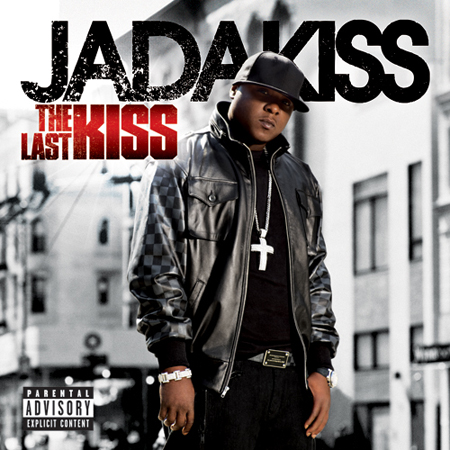
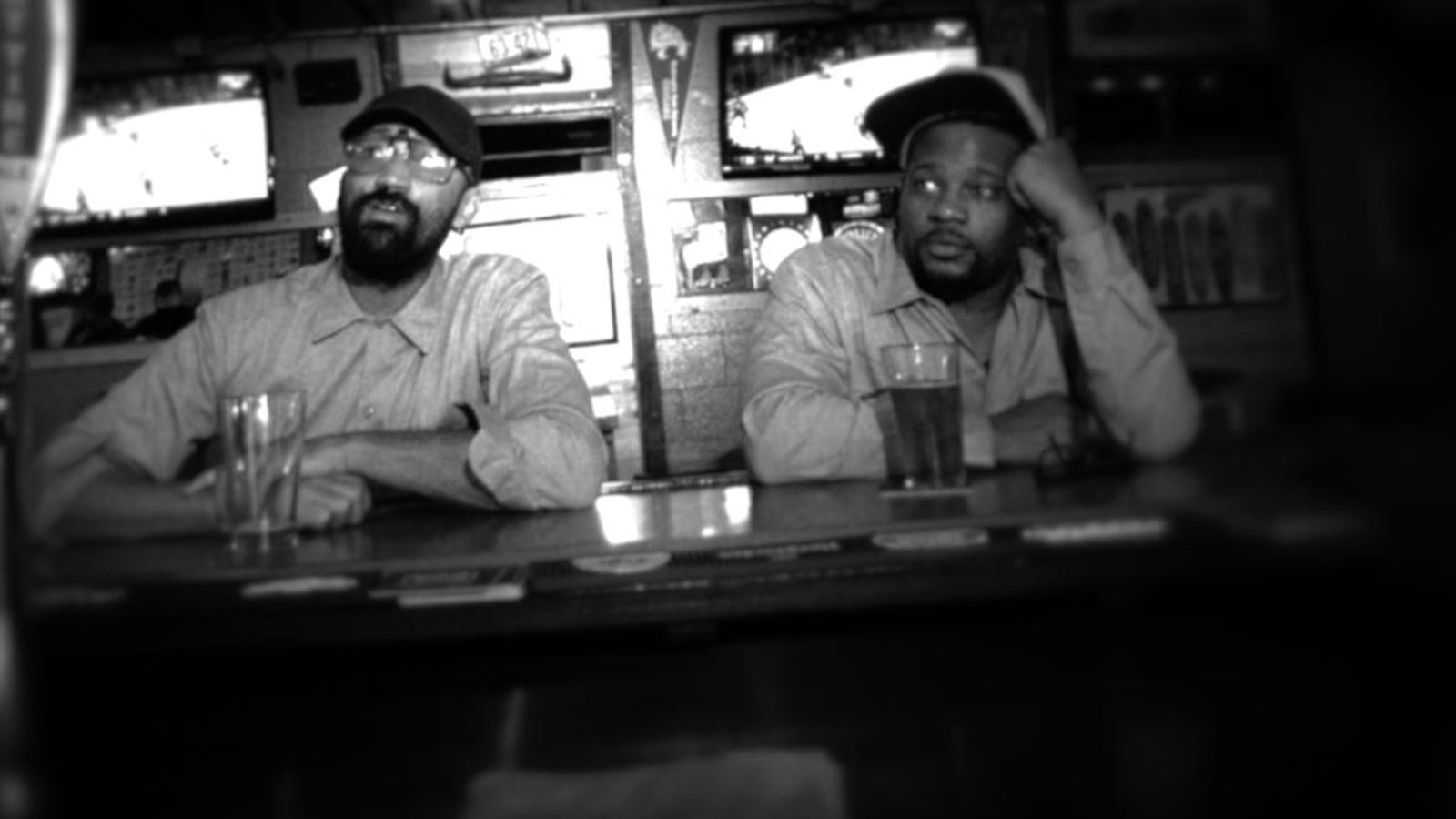
“Forever and Always” is the anchor bolt embedded in Foundation.  Were you unfamiliar with Warriorz, Firing Squad, First Family 4 Life, you’d understand MOP’s entire aesthetic in four minutes flat. Sure, there’s something trite about a “we still ain’t changed” track from a pair of New York 90s stalwarts who rap like Brownsville was a Bessemer Process. But what else do you want from the Mash Out Posse? Crisp jeans and a button-up? Sinatra at the opera? Fame claims he’s “still in the hood with a dusty-ass .38, childhood friends gone, body after body.” Sentimentalizing on St. Mark’s Ave, the radio bumping EPMD, going to kindergarten with Smooth Da Hustla (presumably packing #2 pencils.)

Evolution is imperative for some artists, less so for others. Had Kanye kept the backpack rhyme book and the college motif, he’d be doing guest-spots on the new Kidz in the Hall jaunt. But to the gun-clapping gang behind www.iwillfuckyouup.com, switching up is tantamount to selling out. Has anyone ever been gullier than Danze and Womack? 50 was probably plying them with scads of G-Unit cash and still, Fame’s teeth stay looking like unpopped popcorn kernels.We are the better for this. Even the most minor encroach of trends and technology on Foundation feel forced–see Demarco’s second-tier Ron Browz facsimile on “Street Life” that feels dated on its week of release. When they stick to the brick-bat basics, they thrive.

Read the rest of this entry »

  Digg!

LA Times: Al Green-Lay It Down Review

June 4th, 2008

al-green-lay-it-down-433703.jpg

Originally Published at the LA Times

3.5 stars out of 4

Woody Allen once opined that 80 percent of success is showing up, an adage that proves especially accurate when applied to the music of Al Green. Since the 62-year-old son of a sharecropper paired with Willie Mitchell for 1969’s “Green Is Blues,” every time he shows up in the recording booth he brings one thing that few performers can match: namely, his now-fabled, almost extraterrestrially gorgeous voice, a delicate but rich timbre that reaches hard-to-reach notes as though it came equipped with a stepladder.

Of course, Green has had his share of missteps in his 40-plus-year recording career, but more often than not, the mere presence of his seraphic croon is good enough to turn a mundane song into a work of beauty. Luckily for Green, the tunes on “Lay On Down,” his third effort on the Blue Note label, are more than serviceable. Ditching Mitchell (who had produced Green’s last two records) in favor of Roots maestro Ahmir “?uestlove” Thompson and James Poyser, the arrangements are meticulous and supple, with the trio wisely enlisting red-hot neo-soulsters the Dap Kings and Philly R&B legend Larry Gold for horns and strings, respectively.

As for Green, his voice sounds as though it’s been preserved in amber, with the ordained minister still blessed with a limitless register that he gainfully employs throughout the record’s 45-minute length. Tracks like the funky finale, “Standing in the Rain,” prove that though Green might be able to qualify for the AARP, he can still get down, while the swooning title track amply demonstrates that Green still knows his way around a ballad better than anyone. Featuring some of the Reverend’s finest work in years, Green’s latest is proof positive that as important as it is to show up, you still need to know how to lay it down.
Buy Al Green-Lay It Down

Download:
MP3: Al Green-”No One Like You”
MP3: Al Green-”Standing in the Rain”

  Digg!

Wale Realizes the Full Potential of the Mixtape

June 4th, 2008

waleseinfeld_main.jpg

Last November, Zeus wrote a post dissecting the differences between albums and mixtapes for the benefit of crits and fans who had been mistakenly conflating Pusha-T rhyming over old G-Unit beats for high art. It happens. The post may have been a tad heavy-handed, but its point was salient. More often than not, mixtapes lack the conceptual unity, cohesiveness and thoughtfulness that people should require from great records. Not to say that We Got it 4 Cheap Vol. 2 or any number of the critically adored Lil Wayne mixtapes didn’t have their share of exceptional moments, but they were poorly mixed, filled with migraine-inducing DJ drops, and benefited heavily from unfair beat selection advantage. I.E. to borrow from Kane: rhyming over “Reppin’ Time” is like spandex, they can make any ass seem good. Well, except Jim Jones.

What’s not up for debate is the fact that those tapes, along with the Dipset 03-05 material and the early 50 Cent bootlegs, changed the game. What was once a promo tool to stoke hype has become a vital artistic necessity, one spurred on by the increasing reluctance of majors and indies to release rap albums.* Compounded with the Internet’s ease of transmission, rappers have been slowly realizing the medium’s potential: namely, that by releasing an album on the Internet, you can use prohibitively expensive copyrighted material gratis and in the process manage to keep your name on everyone’s mouths. Everyone wins.

But the format didn’t reach full bloom until just recently, with rappers increasingly discovering creative avenues that had been ostensibly killed with the Biz Markie sampling decision. In the last 10 months alone, we’ve seen Rhymefest’s Man in the Mirror Mixtape flip old Michael Jackson beats, Blueprint’s Blueprint Vs. Funkadelic, and Kanye’s pre-Graduation mixtape featuring uncleared Thom Yorke and Peter, Bjorn & John samples. Yet none of that trio has realized the medium’s true capabilities quite like D.C. rapper Wale’s Mixtape About Nothing that dropped last week.

And Yet Obstacles Remain….

l_e271598100450ff0d0a3a51a32b4dc5b.jpg

For those just tuning in, over the past year Wale has built a name for himself as one of the most promising rappers around, dropping the impressive 100 Miles & Running mixtape, signing to Interscope, earning the cover of Urb, a spot on EW’s Top 8 To Watch in 08 list and placement on the main stage of this year’s Rock the Bells tour. But for all the attention he’s already accrued, Wale’s conceptually brilliant The Mixtape About Nothing not only justifies the acclaim, but deserves to put him on anyone’s short list of the best rappers of his generation.

From “The Opening Title Sequence,” where Wale flows over the gurgling Seinfeld bass line, to “The End Credits,” Wale’s songs burst with ideas. The guy’s got an opinion on everything from the myriad problems facing the rap world to the press to illegal downloading, to the DMV and how its possible that Eddie Murphy could get a wife, ex-wife and baby mother all in the same year. Whereas it could easily come off as sub-emo whining, Wale succeeds because of his ability to reconcile contradictions. He’s moral without being moralizing, he’s smart but not nerdy, he’s critical but not conscious. Jonathan Bradley apt described him “as a uniter, not a divider, with a strongly backpacker aesthetic with a breakout song that features Bun-B and Pusha-T. He expresses strong affection for the idiosyncratic sound (go go) of his hometown, but makes it palatable for those who have never heard it before. He combines Southern efficiency with Northern charm. He’s the kind of rapper everyone wants.”

Despite repeatedly boasting that the tape is about “nothing,” like Seinfeld itself, Wale’s intentions are subtly subversive and filled with self-deprecating satire. Songs like the erstwhile “Nike Boots,” are now re-titled “The Cliched Lil Wayne Feature.” “Back in the Go-Go” has morphed into the “The Feature Heavy Song.” Whereas 100 Miles & Running marked the emergence of Wale, the rapper, a complex, lyrical dude who could kill a Camp Lo beat then run in place to “D.A.N.C.E;” The Mixtape About Nothing heralds the triumph of Wale, the artist, an off-kilter but cool MC with an encyclopedic knowledge of pop culture flotsam and jetsam, ranging from Seinfeld minutiae, to riffs on Narml from Garfield and the Game Genie.

Complete With Shoes That Glow in The Dark

535806262_l.jpg

Utilizing familiar, amusing snips of Seinfeld dialogue, a shout-out from Julia Louis-Dreyfus and clips from Kramer’s racist outburst, Wale ingeniously weaves skits with song concepts, intelligently covering a gamut of topics ranging from race to culture to inter-personal relationships. Whenever dudes like Kanye or Lupe try to speak “consciously,” they at best sound polemical and strident, at worst muddled and vague. By contrast, Wale evidences an almost Obama-like ability to simplify complicated topics and re-organize them in sober, clear light. In particular, his almost uncomfortable honesty and deeply reflective revelations on “The Kramer” turn it into one of the smartest and most resonant songs to grapple with race in recent memory.

The most exciting part about The Mixtape About Nothing is getting to hear a young rapper with new ideas. Granted, Wale probably owes a certain debt to Kanye, Lupe and yes, Lil Wayne for making it okay for rappers to be weird again. But Wale goes out of his way not to compare himself to any big names, declaring on “The Artistic Integrity,” that “they say, I’m Jay-Z, they’re say I’m Kanye, they say I’m Lil Wayne…why can’t they say that I’ve found my own lane.” He’s no impostor trying to inherit an imaginary throne. He’s just trying to be Wale. Which sounds normal in theory but isn’t when every new major label goon over the decade has tried to foist the notion that they’re the next [insert Pac, BIG, or Jay-Z here ].

Think of Wale as the platonic ideal spawned from the Rawkus/Okayplayer school and from the swag and aesthetic splendor of the decade’s most influential album, The Blueprint. The Mixtape About Nothing isn’t just a great mixtape, it’s a great record, the rare rap album capable of transcending genre and improving with repeated plays. Not only is it a high-water mark for the mixtape medium, but it also sets the bar for the next generation of rappers. I suppose this could be Wale’s creative zenith, but I doubt it. If he continues to get better at this rate, the guy’s eventually going to get another title taken from an episode of Seinfeld: the truth.

* Clearly, y’all are as breathless for that new Nelly jaunt as I am.

Download:

ZIP: Wale-The Mixtape About Nothing (Left-Click)

  Digg!

Elzhi’s Europass: The Best Rap Album of the Year Thus Far

May 28th, 2008

28ivvgo.jpg

One of the more frustrating things about hip-hop heads*, specifically those old enough to remember the first two Golden Ages, is the general groupthink that no hip-hop album made today can possibly be as great as anything made during 88-96. This is just how it goes. Nostalgia is a motherfucker and no matter how dope I think “Cappuccino” and “Royal Flush” are, they will still never give me the charge that I get when a DJ plays “Gimme the Loot” back-to-back with “Hip Hop Hooray.” I get it. Sure, there’s probably also a grain of truth to the argument that things were in fact, better back in the days (no Ahmad). Hell, at times reading Thimk’s digitized collection of old Source magazines makes me think that comparing 88-96 hip-hop with modern stuff is like comparing apples to orange pineapple juice.

Yes, fantastic hip-hop is produced on the (semi) regular, but as we’ve discussed, you’ve got to dig deeper than the Universal Music Group hegomony (hey Def Jam, thanks for sending me the Blood Raw and Pittsburgh Slim jaunts, they make for fantastic coasters). Making it harder, of course, has been the demise of all the independent rap outfits. Forget Fondle ‘Em and Rawkus, where are the Tommy Boy’s, 4th & Broadways, Delicious Vinyl’s and Wild Pitch’s? Go listen to “Labels,” again, half of those crooks no longer exist, the other half have been folded into some larger umbrella organization where the only thing people can agree upon is that they need more “Lollipops.” ** Sure, Def Jux and Stones Throw are usually consistently very good and every now and then Duck Down and Rhymesayers release something worthwhile, but none of them release more than four records a year and though B.C.C. are something fierce, I’m just not checking for them in 2008. To say nothing of Mac Lethal.

Elzhi does not have a label. In fact, you’ve probably never heard of him unless you’re one of the 23 people that semi-regularly comment on this blog. A few years ago he joined Slum Village and nearly did the impossible: making people care about them after Dilla left. Over the past few years, he’s been working the cameo circuit, popping up sporadically to kill it on every Detroit release, slowly building anticipation for a full-length allegedly supposed to drop later this year. Europass was supposed to be a stop-gap, self-pressed CD to sell at merch tables on Elzhi’s recent Spring tour of Europe (he’s huge in Antwerp). According to Elzhi’s Myspace, it’ll also see a physical release at some point, but who knows? Even if it doesn’t, it’s not just the best rap album of the year, it’s enough to make me thank god for the Internet.***

Big El

elzhi1.jpg

Lest I get pilloried in the comments section, I’ll refrain from calling Europass a “classic,” but if it isn’t, it’s not far off, hitting many of the benchmarks required from classic rap records. First and foremost, Elzhi is a quintessential “rapper’s rapper.” Not in any sort of corny, Canibus “scientific” way, but in that true-school, “I will battle you until your larynx crumbles” way. His flow is machine-gun like and the subtext beneath intimates that it’s been honed under the pressure of thousands of ciphers and tapes of Road to Riches played until they popped.

Reading the fully transcribed text (see comments section) of his verse from “Motown 25,” should be mandatory for aspiring rappers. Forget the perfect pacing and the delivery coming at a whiplash speed, study the syllable placement and the cleverness of the wordplay. All the people praising every half-assed Lil Wayne turn of phrase (sorry bucko, “like ranch I dip” is fucking retarded), ought to snap to attention to a line like “I’m higher than the jeans on Urkel.” Which is pretty much the most obvious yet brilliant line since V. Vaughn came to “save the game like a memory card.

Production-wise, this marks Black Milk’s official emergence as one of the finest beatmakers in music. Forget the Dilla comparisons, he’s very much his own artist. As much as this showcases Elzhi’s lyrical and technical capabilities, this remains very much Milk’s record. Popular Demand, Phat Kat’s Carte Blanche and Caltroit merely hinted at his potential and indeed, Europass feels like he’s only beginning to enter his prime. Handling 75 percent of the record’s tracks, the man born Curtis Cross eschews the sunshine organicism of post-Native Tongues Dilla, for a darker, metallic vision. This is the rusting, twisted metal of post-glory days Motown. Tracks like “That’s the One,” “Fire” and particularly, “Talkin’ In My Sleep” find him conjuring the sound of ice and cold Detroit steel. Drums pop like cars backfiring in a pounding rain. Soul samples are splintered into oblivion. If the Bomb Squad and El-P are the overt soundtrack to urban decay, Milk is the subtle alternative, with music less explosive than it is haunting. A fellow Rock City native, Elzhi plays the perfect foil, tackling Milk’s tempestuous soundscapes with that rare chemistry found in the great duos: Cl Smooth & Pete Rock, Guru and Premier, Marley Marl and Kane.

Elzhi Conducting An Auction at Butterfield & Butterfield

378551_height419_width419.jpg

It’s been said that Elzhi doesn’t have all that much to say, which is partially true. Thematically, he sticks to boasts about lyrical skill, the perils of inner city existence and a love of hip-hop, weed and women. But it’s not just what Elzhi says but rather the way in which he says it. Lazy rappers would describe a girl by saying she has a “phat ass,” whereas on “Save Ya,” Elzhi describes one as having a “figure that can turn ‘no’ into ‘maybe.” Instead of saying he’s a “dope MC,” the ex-Slum Villager will declare “what I put down in the sound coil/is crown royal/it’s like I dug in the ground soil and found oil.” He doesn’t “slay wack rappers,” he’ll “known to terrorize/paralyze a pair of guys/or prepare to rise off the land, sea, air and skies.” You get the drift.

Five years ago, you or I wouldn’t have heard Europass. No major would’ve ever touched it and if we were lucky, some tiny indie might’ve released an extremely small number of copies to minimal promotion and buzz. But times have changed and with the spate of blogs, file-hosting services and the ever-increasing emergence of the Internet as the new streets (weird), Elzhi’s Europass will probably get more promotion than that godawful Pittsburgh Slim album that Def Jam buried at the beginning of the year. Not only is Europass the best rap record since at least The Big Dough Rehab, it provides a strong argument for the D being the vital nerve center of hip-hop right now. And no, I’m not talking about Dwayne.

* Other than an unabating love of Cormega.

** Humanity, you really blew it on this one.

*** And in all likelihood, unless Bar Refaeli reveals herself to be a huge fan of both subterranean hip-hop and the blogosphere, this is probably the only time I will ever make that statement.

Download:
MP3: Elzhi ft. Royce Da 5′9-”Motown 25″
MP3: Elzhi-” Talkin’ In My Sleep”
MP3: Elzhi ft. Black Milk-”Fire”

  Digg!

Needless To Say Any Compilation Entitled Doob Doob O’ Rama Is Destined For Greatness

May 22nd, 2008

Indeed. As is any compilation that features the song from the clip above, which you may remember from the opening credits of the very excellent Ghost World. Thanks to crate-digger and ex-Stylus alum Todd Hutlock, I’ve been listening non-stop to  Doob Doob O’ Rama Filmsongs of Bollywood for the past 24 hours. Recorded in the 60s and 70s most of the tracks bear a psychedelic bent that meshes nicely with the traditional Indian instrumentation. It’s great stuff. Highly recc’d for fans of George Harrison, Lamb Korma, Bobby Jindal and doob-o-ramas.

Download:
MP3:  Mohammed Rafi-”Jan Paheehan Ho”
MP3:  P. Suseela/S. Rajeswari/S. Janaki-”Isaiyarasi”

  Digg!

LA Times: Bun B-II Trill Review

May 22nd, 2008

bunbiitrill.jpg

No, the three and a half (out of four) stars that I tossed to II Trill does not mean that I have resolved to only rock 22 inch rims and sip syrup in my candy-colored Caddy. Nor does it mean this blog is about to turn into a Paul Wall, Lil Flip or Mike Jones tribute page (Remind me who is Mike Jones again?). But Bun B never deserved to be lumped in with the rest of those amateurs in the late great imagined 2005 Houston takeover, where the National Association of Critics Who Discovered Rap in 2002 tried to use the dubious logic of “B.b.but they’re from Houston,” to ride for a bunch of no-talent mealy-mouthed MC’s.

Despite the mixed reviews its drawn, II Trill is a very good record. In my opinion, it’s more consistently enjoyable and focused than both Underground Kingz and the first Trill. Of course, any album with song titles that include “Swang On ‘Em” and “That’s Gangsta” is liable to lapse into generic gangsterisms. But give Bun credit for mostly managing to transcend those tropes. Of course, like most rap records, it’s overly long, to say nothing of “Just be Good to Me,” Bun’s horrible collabo with Mya, that to be kind is no “Movin’ On.” Still, on a trillness scale (eerily similar to the Pitchfork scale), I’d give it an 8.2.

LA Times: II Trill review

Download:
MP3: Bun B ft. Lupe Fiasco-”Swang On ‘Em” (Removed due to extremely obnoxious label request)
MP3: Bun B ft. Pimp C & Chamillionaire-”Underground Thang” (Removed due to extremely obnoxious label request

  Digg!

Wolf Parade’s At Mt. Zoomer: Great Record, Terrible Title

May 21st, 2008

4294.jpg

Regardless of what you think of their music, you’ve got to respect Wolf Parade. When Apologies to the Queen Mary dropped in late 2005 and every music journo prematurely slapped “next Arcade Fire” tags on them, they could’ve easily played the comparison to the hilt by touring relentlessly, making themselves available to everyone with a pulse and a wireless connection, and recording a follow-up as rapidly as possible, lest they not let their red-hot buzz cool off. Instead, they did the opposite.

Sure, they played the festival circuit like any young Canadian band eager to pay the heating bills, but rather than milk their newfound fame, the band took nearly three years off to chase their solo dreams, an odd move for a band so young and untested. Heading back to the lab, Spencer Krug and Wolf Parade’s other principle songwriter, Dan Boeckner seemed more eager to create and hone their craft than play the same songs night in and night out while caking off that Sub Pop “sensitive sorostitute” fan base they had partially cultivated. It was a gamble and one that paid off, with the band alloted time to mature while simultaneously letting the hype burn off as critics that once heralded their arrival angling to get their jollies from more zeitgeist-friendly material like Hercules & Love Affair and Santogold (admittedly, both solid records).

Allowed to evolve somewhat beneath the radar, Krug released two eccentric, brilliant solo turns under the atrocious Sunset Rubdown moniker. Neither drew the insane acclaim myself and a few others deemed them worthy of, but both ultimately met a favorable reception and rubber-stamped Krug’s place on the Best Young Songwriter short-list. As for Boeckner, he dropped the solid if not overly spare Handsome Furs LP which confirmed his own significance and more importantly, illustrated that Krug wasn’t the only one who couldn’t pick a band name or album title for the life of him.

Wolf Parade: Surprisingly Very Little Fun at Parades

l_8c07ca1fdb773687eb2976c33f1d2eea.jpg

But for all their solo projects’ merits, it’s Wolf Parade where both songwriters are at their most accessible and easily enjoyable. Both Boeckner and Krug exert a sort of push-pull on the other, with Krug’s arabesque abstraction tempering Boeckner’s more straight-forward Springsteen skew and vice-versa. Ultimately, it yields a sense of balance and clarity that both Sunset Rubdown and Handsome Furs often lack (though not necessarily to their detriment.) The duality appears from the on-set of At Mount Zoomer, with opening cut “Soldier’s Grin” halfway to fist-pumping anthem status before halting in its tracks for a woozy, vertiginous bridge of surprising grace and power.

Thankfully re-titled from the abominable Kissing the Beehive, Wolf Parade’s second album sounds sleeker and more forceful than Apologies to the Queen Mary, with the addition of music’s Pau Gasol, ex-Hot Hot Heat guitarist Dante DeCaro beefing up the band’s previously ramshackle, lo-fi sound. On the second track, lead single, “Call It Ritual,” Krug gives a Parkinson bleat about “swinging his sword for show, while you turn your flower petals so slow.” His vocals are taken out by a vicious guitar grind and instantly, you become aware that this is a different band, one that’s become more polished while simultaneously retaining the tensile quality to their music that made them special in the first place.

It’s reductive to call this the Krug and Boeckner show. At Mount Zoomer finds the rest of the band making strong contributions, from Arlen Thompson’s bruising drum fills and work in recording and engineering the album, to Hadji Bakara’s Close Encounters of the Third King synths to DeCaro’s pulsing guitar licks that spar with Boeckner to create an almost Television-like interplay. Reviews will inevitably note the record’s proggy stoner rock tendencies, but its greatness lies in its inability to be pinned down. At Mount Zoomer is stoner rock that would sound terrible stoned. It’s too paranoid, there’s too much movement, and too much tremulous alienation in this sepulchral world of radio waves like stone, “100,000 sad inventions rotting inside gray estates” and of course, the kissing of beehives, which I’d wager taste like honey (no Jesus & The Mary Chain). In the end, Wolf Parade trump the sophomore jinx, in the process justifying the attention they received three years ago. So long as they don’t title their third album, “The Boy Who Cried Wolf,” everything should turn out just fine.

Pre-Order At Mount Zoomer

Download:
MP3: Wolf Parade-”Call It A Ritual”

  Digg!

Black Mountain’s Stormy High

January 16th, 2008

37897inthefuture.jpg

Los Angeles always seems strange in the rain. Jim Morrison once may have said something to that effect. Then again, Jim Morrison once declared himself the lizard king and was known to drink blood at wiccan ceremonies, so maybe he wasn’t the best best guy to take advice from. But he was right in this instance. On those rare moments when actual weather interrupts the city’s 340 days of blue sky and white light, LA takes on an unnaturally sinister tone more commonly found in film noir than in actual everyday reality.

About a week ago, a howling gale shook the town, dumping buckets of sweaty, oily rain all over the city. Everyone panicked. Drivers either ignored the inclement weather to skid into jagged wrecks, or else they inched forward at five miles per, crawling timidly and fearfully as though they’d never seen a drop of precipitation in their lives. It was the sort of storm that made you feel like you were trespassing on the earth. The blocks were flooded and each mile I drove, a deluge of hissing spit battered my windshield. On my stereo, the tweaked out, sugar rush of Los Campesinos giggled and I was struck with the epiphany that at that moment, there was nothing I wanted to hear less.

I wanted storm music. Lightning, thunder and wrath of the gods type shit. Fuck all that twee noise, I wanted to bump In the Future (and watch Back to the Future but that’s a separate, ongoing thing that we must discuss at a later date). So with the wind shaking my car all across the road, the sky pitched and cackling, Black Mountain’s ferocious assault rained down upon my head. The first track, is called “Stormy High.” It might be the most appropriately named thing you’ll hear all year. Another song is fittingly called “Wild Wind.” The album itself is a brooding, towering heavy work of psychedelia. A drug-addled, shambling record that re-shapes Sabbath, Pink Floyd, Led Zep, into an unsettling, gorgeous mass. To paraphrase the words of another man often compared to the late lizard king, it’s enough to make you want to make it rain.

Buy In the Future

From In the Future

MP3: Black Mountain-”Tyrants”

From Black Mountain
MP3: Black Mountain-”Druganaut”

  Digg!

Burial-Untrue

November 28th, 2007

hdbcd002.jpg

About three weeks ago when I was in New York, Tal Rosenberg pretty much gushed non-stop about the Burial record’s brilliance. At the time, I didn’t even know that the London-based Dub Step producer had a new album coming out, which isn’t much of a surprise considering fewer than ten people know his actual identity, he doesn’t do shows and he’s not exactly known as being PR friendly. Apparently, his eponymous first record was named last year’s Album of the Year by The Wire, but since I have a hard-time justifying spending ten bucks on an issue of a music magazine, I don’t read The Wire.

In fact, other than a spectacular track called “Unite” on a Dubstep primer I own, it’s safe to say that all I knew about Burial three weeks prior was that “Ceremonial burial” was a crucial and awesome civilization advance in the greatest computer game ever made.
Since then, its been hard not to read about Burial, with every music magazine from London to Brooklyn to E. Brooklyn, rushing to heap it with praise. So I’m a little hesitant to even bother wasting any more words on an album that basically everyone knows is great and at this point, it feels almost bandwagonesque to even chime in, but fuck it.

The thing is, I was pretty underwhelmed by Untrue on the first few listens. It’s not the sort of record that makes much sense in supine, sun-stunned Los Angeles. It’s a bleak record, ideal for wintertime New York or London, a druggy drunken stagger through black drizzle and an incinerating 5:00 a.m freeze. It’s as asphyxiating and claustrophobic as it is austere and beautiful, a mess of of gurgling vaporous soul samples and popping, crackling, two-step drums. Tal called it the sound of the world eating you alive and that’s as accurate a description as I’ve read. Download the MP3’s below, but you’re better off buying the record and waiting for the right time to let Burial’s melancholy, menacing mood music warp its way through the contours of your mind.

See also ex-Stylus editor Todd Burns’ review in the LA Weekly

Buy Burial-Untrue

Download:
MP3: Burial-”Archangel”
MP3: Burial-”Ghost Hardware”

Bonus: From Box of Dub (Dub Step and Future Dub)
MP3: Burial-”Unite”

  Digg!

Free At Last: Mediocre At Best

November 18th, 2007

free_at_last.PNG

I only received a few hundred words in the Times to review Free at Last, mainly because I couldn’t tell my editor in good faith that the record deserved more. I get why people have been buzzing on it. The first two leaked singles (”It’s Over”) and the Jay-Z collabo were nice. And sure, the Roc’s back and that deserves some ink, even though Beans-excluded, Jay’s track record at exposing new talent to to the world is piss-poor (or have you forgotten Sauce Money and A-Mil?). Not to mention the fact that both Curtis and S. Dot are on-board as Executive Producer’s. But honestly, after listening to Free at Last, I’m convinced that he only got the back cover of the Fader because the hipster nation admired the sheer lustrousness of his beard.

I’ve been reading Check the Technique lately and more than anything it re-affirmed the stark differences between the hip-hop of yesteryear versus that of today. Specifically, the importance that rappers previously placed on originality. Whether it was De La’s black hippies gimmick, M.O.P’s rap as Premo-produced scream metal, or Digital Underground’s hip-hop Funkadelic, it was damn near impossible to make a name for oneself without a fresh identity. Sometime in the last decade that idea was lost (and yes, I imagine it has something to do with Puffy).

In a rap world where Young Jeezy isn’t laughed out of the building and “journalists” don’t bat an eyelash at calling Lil Wayne the greatest rapper alive, Freeway is certainly far from bad. But he’s even further from being good. Strip him of big name guest appearances and his Just Blaze-lite beats and the guy is nothing more than another humorless “hustler/rapper” (and not the other way around.) I called Free “JV Jay-Z” in the Times review, but that might be a bit too charitable. He’s more like a poor man’s AZ. The type of MC that can spit a solid 16, but one summarily incapable of projecting himself as anything more than a) a hustler b) a cocaine aficionado c) someone who reps the streets (and yes, Free at Last actually has a song called “Reppin’ the Streets.”). Don’t get me wrong, Free at Last certainly has its moments. But truthfully, you’re better off playing Reasonable Doubt for the 532nd time, or even digging up that old copy of Do or Die, or hell, trying to grow your very own billy goat beard.

Review of Free At Last in the LA Times

MP3: Freeway-”It’s Over”
MP3: Freeway ft. Jay-Z-”Roc-A-Fella Billionaires”

  Digg!


Get your girl a gift that even the top music stars would die for. At Abazias you can create and design your own custom engagement rings, necklaces, and even watches.


We have Pearl Jam tickets, Radiohead tickets, Bruce Springsteen tickets, Bob Dylan tickets, and Kid Rock tickets