
Passion of the Weiss

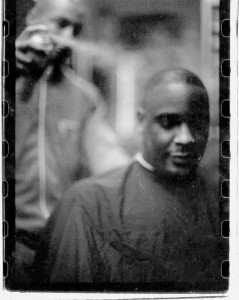
Question in the Form of An Answer: yU (Diamond District)

February 23rd, 2010

l_7482481322ec1fee460f211c573ef882.jpg

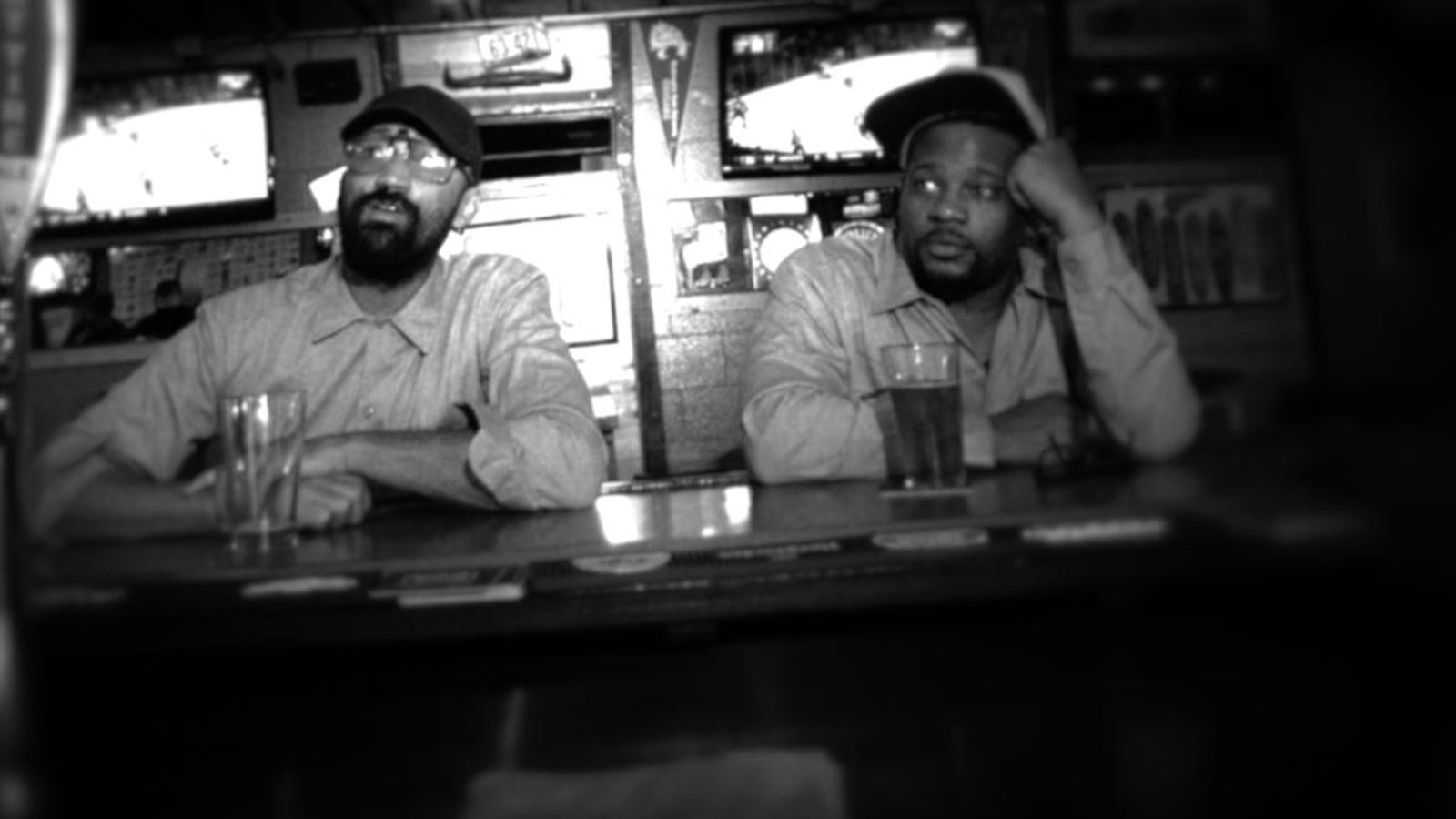
Rapper/producer yU is probably best known as one third of D.C. rap supergroup Diamond District with X.O. and Oddisee, but he’s been toiling for years in Washington’s underground scene. He also stakes membership in the Remainz Crew and the 1978ers, a production team formed with fellow beatmaker Slimkat78. Last year saw the free release of y’s Before Taxes, a 16 track album comprised of leftovers from his official solo debut The Earn. That Before Taxes is so consistent and cohesive despite being compiled from b-sides stands as testament to yU’s forceful, agile rhyming and exceptional ear for beats.

In anticipation of The Earn’s release later this year, the rapper born Michael F. Willingham reveals his back story, his influences and illuminates the state of D.C.’s hip hop scene. Aaron Matthews

What was your first experience with hip-hop?

My moms was into hip-hop. I remember seeing Breakin’, Beat Street at the movie theatre. Her music collection, she had the first Tribe album, Pete Rock and CL Smooth’s Mecca & The Soul Brother. My first stepbrother used to perform at talent shows. He would call the radio station and rhyme, freestyle or whatever. Actually that was the first time I actually seen somebody doing it. He put me onto “Showtime at the Apollo,” the latest show I’d ever seen come on. EPMD was on there with DJ Scratch and he was doing tricks and stuff.

Read the rest of this entry »

  Digg!

Popscene: Suede - “Suede”

February 10th, 2010

album-suede.jpg

Aaron Matthews prefers Suede to White Denim. 

Fusing the catchy leer and guitar heroics of 70s glam rock with the grim crooning of Scott Walker, and the melodic melodrama of the Smiths, Suede was the first Britpop band. They formed in London in 1989, comprising singer Brett Anderson, bassist Matt Osman and Anderson’s then-girlfriend Justine Frischmann (future frontwoman for Elastica) on rhythm guitar. Lead guitarist Bernard Butler was later conscripted through an ad in music rag Melody Maker. For a few years, they played local shows, shopped around demos and released one single, “Be My God”/”Art”, on the indie label RML Records; the single was later destroyed after the band felt unsatisfied with it. In ’91, Frischmann left Suede and began dating Damon Albarn of Blur, and the band started to attract attention in NME and Melody Maker. One year later, they signed to the independent Nude Records and released their first single, “The Drowners”; the band released their self-titled debut in 1993. Produced by future Pulp soundsmith Ed Buller, Suede would go on to debut at #1 on the U.K. album charts and win the coveted Mercury Music Prize.

The band’s greatest innovation was teaching a generation of U.K. bands the significance of a skilled guitarist. Butler’s crunchy guitar riffs channel both Mick Ronson and Johnny Marr without approaching pastiche, thanks to Ed Buller’s layered yet crisp production. Anderson’s lyrics largely chronicle the youthful indiscretions that came to define early 90s London youth, experiments conducted with needles (“So Young”), medication (“Sleeping Pills”) and bisexuality (“The Drowners”, “Moving”). The gentler numbers tackle more universal topics: Breakdown” is a tribute to a friend dealing with depression, while album closer “The Next Life” is a piano-led ode to an imagined escape from everyday drudgery. Suede’s best songs combine Morrissey’s emotional theatricality with the unapologetic catchiness of glam: single “Animal Nitrate” is easily the catchiest song on the album, a stark account of incest and physical abuse brilliantly disguised as an upbeat hip shaker, complete with handclaps. “Pantomime Horse” is a drifting ballad with the cosmic-hippie feel of early Bowie, culminating in Butler’s most brazen soloing, while “Metal Mickey” is glam tribute played straight, raucous and absurdly catchy riffs backing incomprehensible lyrics.

Read the rest of this entry »

  Digg!

Popscene: Elastica – “Elastica”

December 9th, 2009

elastica-frontal.jpg

 Aaron Matthews is a thief with taste. 

Appropriation has always been a touchy subject in the world of pop music. The biggest bands to emerge from Britain in the last half-century largely built their careers on rewriting other people’s songs. Led Zeppelin, Oasis, and the Stones are all offenders, sure, but these acts all added something to the hooks, chords and lyrics that they cribbed. Appropriation and self-reference have been inherent in pop since Chuck Berry’s heyday and the advent of sampling only simplified the process – see Arulpragasam, Maya. Coincidentally, it was the soon-to-be M.I.A. who got her start on tour with Elastica, a band who made their name revamping post-punk and new wave classics–flipping the methodical pop deconstruction of Wire into actual pop songs, turning the Stranglers’ impassioned lament “No More Heroes” into an ode to sitting around the house. (For a more in-depth comparison of Wire’s songs with the Elastica songs that plagiarized them, this video is a helpful aid.)

Elastica was created by two ex-Suede members, singer Justine Frischmann and drummer Justin Welch in London, 1992; later that year, the band added Donna Matthews on guitar and Annie Holland on bass. Elastica were picked up by indie label Deceptive Records in 1993, and released their first single “Stutter” the same year. After charting two UK top 20 singles with “Line Up” and “Connection” in 1994. Elastica released their self-titled debut a year later to critical acclaim, a number one chart spot and a Mercury Prize nomination.

Read the rest of this entry »

  Digg!

The Hex is Lifted: The Flaming Lips’ Embryonic by Aaron Matthews

October 30th, 2009

the-flaming-lips-embryonic.jpg

Once I saw the video for “Do You Realize,” I was hooked. I copped The Soft Bulletin. I listened compulsively, obsessed with its sparkling, widescreen pop. From there, I ran through the Flaming Lips’ discography:  Transmissions From The Satellite Heart and Yoshimi Battles The Pink Robots (the Lips were always a covert pop band), Transmissions and Clouds Taste Metallic (filled with brilliant alternate universe top 40 hits–and in the case of “She Don’t Use Jelly,” an actual top 40 Peach Pit hit.)  Once you dug through the noise and lyrics about zoo animals and aliens, the tunes were there.

From The Soft Bulletin on, Wayne Coyne’s writing turned inwards, and the band started structuring their songs around their studio capabilities, as opposed to what worked live. Despite their stellar live shows, the Lips had become masterful studio outfit, with guitars beginning to disappear from their records. By Yoshimi, the Lips’ conception of the studio as instrument became readily apparent. Despite its reputation as a retread, At War With The Mystics, showed the Lips’  willingness to experiment with more overt prog influences, including suite-like song structures that included bizarre musical movements. Unfortunately, the song writing was largely weak, with the songs themselves bludgeoned by David Fridmann’s gaudy production, rendering the songs more interesting for their sonic dressings than lyrics or melodies.

Read the rest of this entry »

  Digg!

Popscene: Supergrass-”In It For the Money”

October 5th, 2009

135134815_3a28639572.jpg

Aaron Matthews blogs for the money and the super grass. 

Supergrass formed during Britpop’s ‘93 apex. Only in their early 20s, the Oxford-based trio of singer/guitarist Gaz Coombes, drummer Danny Goffey, and bassist Mick Quinn  saw instant success with their Backbeat Records-released first single, “Caught By The Fuzz,” earning raves from the NME and Melody Maker, and earning them a deal with Parlophone. Their subsequent debut, 1995’s I Should Coco,  a splattering loogie hocked at the-then Celine Dion/Bon Jovi domination of the charts, won them the Mercury Prize and three straight weeks at number one on the charts–even though in the United States their name remains little more than a synonym for the chronic.

Fast forward two years–the band’s self-produced sophomore effort, 1997’s In it For the Money expands beyond the bubbly glam and punk-pop of their debut to pay homage to their parents’ record collections. Supergrass’ British pop, glam and punk influences were salient on their debut, yet their second shows a greater reverence while artfully avoiding pastiche. The Who, Elton John, and the Beatles (particularly on the swirling “Going Out”) are some of the more transparent inspirations, but the band succeeds in creating a swirling diverse palette of sounds and moods, shifting from blistering quasi-grunge (“Richard III”) to exuberant sunshine pop (“Sun Hits The Sky”).

Read the rest of this entry »

  Digg!

The Next Spot: Killer Mike–”I Pledge Allegiance to the Grind II”

September 21st, 2009

870_killer_mike__i_pledge_allegiance_to_the_grind_ii_2008_1.jpg

The Next Spot is a recurring series dedicated to the albums that could’ve, would’ve, should’ve made the Decade Top 50. 

Michael Render first attracted attention with his guest appearances on Outkast’s “Snappin’ And Trappin’” and “The Whole World”, but he never sounded completely at ease over Dungeon Family space-funk. I Pledge Allegiance II is backed by a line-up of mostly unknown producers providing simple but effective bangers that perfectly conform to Mike’s fiery bark.

Channeling Tony Robbins on the intro, Mike explains that the album is meant to soundtrack your success. He’s less interested in telling listeners how much money he has and more about talking about how to get that Yet hustling is only one facet of the grind and Mike wears many masks over the album’s 17 tracks: motivational speaker, preacher, and yes, hustler. But like his personal hero (early) Ice Cube (who appears on the polemic “Pressure”), Mike embodies all of these characters without being contradictory.

Read the rest of this entry »

  Digg!

Popscene: Blur-”Blur”

September 4th, 2009

blur-blur-frontal.jpg

 Aaron Matthews uses “lifts” not “elevators.”

Leading up to their 1997 self-titled triumph, pundits harped that Blur had won the battle of Britpop but lost the war to Oasis. After all, What’s the Story, Morning Glory was a critical and commercial success, going quadruple platinum in America when Blur could barely crack the Billboard 200. More damning was that 1995’s The Great Escape marked a stylistic dead end–the crisp, poppy Stephen Street production began to sound gaudy and forced, and the songs all bled into each other.

1997 found the pendulum shifting back to Albarn & Co after Oasis’s Be Here Now was received with critical opprobrium and a swift sales drop-off following a record-breaking chart debut. New Britannia was crumbling, they couldn’t sell a record to anyone who called Bobbies “policemen,” and Graham Coxon developed the drinking habits of Andy Capp.  Somehow, this led the lads of Blur to take inspiration from Britpop’s antithesis – American indie rock. While their opposition to American grunge inspired Blur’s peak years, suddenly Beck and Pavement became key influences transmitted through Coxon, the resident indie obsessive.

Read the rest of this entry »

  Digg!

The Next Spot: Devin the Dude-”Just Tryin’ Ta Live”

August 16th, 2009


60567807.jpg

The Next Spot is a recurring series dedicated to the albums that could’ve, would’ve, should’ve made the Decade Top 50. 

Devin Copeland started rapping with Jugg Mugg and Rob Quest in the Odd Squad, whose Fadanuf Fa Erybody!!, was famously called Rap-A-Lot’s best album by no less than Scarface. In ’96, he joined the Face-assembled quintet Facemob. Yet Devin’s singular presence didn’t fully come across in either group, though the Odd Squad’s amiable goofiness clearly set a precedent for Devin’s solo material.  What really should’ve been his commercial break-through was Just Tryin’ ta Live, his long-awaited sophomore album that featured beats from Premier, Dr. Dre and Raphael Saadiq and cameos from Xzibit and Nas.

But while Just Tryin Ta Live extensively chronicles the day-to-day struggles of a man concerned with typical party material, wine, weed and women, it somehow it remains as far away from party music as you can get. That limited topical range might drag in another rapper’s hands, but Devin’s endearing weirdness keeps things fresh. On opener “Zeldar,” Devin is an alien who discovers a patch of strange green trees in a field and decides to smoke them. “Lacville ‘79” is an affectionate tribute to his busted-ass Cadillac, which he keeps despite his complaints because it fits his easygoing lifestyle. “Who’s That Man, Moma?” is a cautionary tale, warning parents not to bring their seeds to a Devin the Dude show, “…unless they want to see some grown niggas shakin’ they bone.”

Read the rest of this entry »

  Digg!

Popscene: Pulp-”His ‘N’ Hers”

July 29th, 2009

pulp-his-n-hers-delu-366857.jpg

Aaron Matthews prefers this “lipgloss” to Lil Mama’s.

Pulp’s career trajectory seems distinctly quaint in the blog-bombarded, Hype Machined era. While modern times mean a disappointing sophomore effort is enough to make people forget you faster than you can say Clap Your Hands Say Yeah!, Pulp lingered in near total obscurity for 12 years before garnering commercial attention. Formed by 15-year old Jarvis Cocker in 1978, the Sheffield-based group didn’t release their debut, It until 1983, and it took a full decade working the pub and grub circuit to finally get themselves a deal with Island Records in 1993.

Their Island debut, His ‘N’ Hers, saw release the following year, and signaled Pulp’s coming-out-party.  With Leonard Cohen the clear-cut inspiration for Cocker’s sex, love and class-obsessed narratives, and Scott Walker, David Bowie and Bryan Ferry, his obvious vocal progenitors, Cocker’s myriad influences finally coalesced into a cohesive sound and vision. Meanwhile, Pulp themselves settled into a definitive and seamless blend of glam-rock, post-punk and disco.

Read the rest of this entry »

  Digg!

Beat of the Week: Pete Rock & C.L. Smooth’s “All the Places”

July 20th, 2009

peterockclsmooth-themainingredientfront.jpg

Aaron Matthews wrote this beat de-construction while wearing a suit made of talking Teddy Ruxpin’s. Top that, Gaga.

The evolution of Pete Rock’s production from Mecca & The Soul Brother in ‘92 to The Main Ingredient two years later, is akin to the evolution of Dr. Dre’s production from The Chronic to Doggystyle. Like Andre Young, Pete saw little need to switch up his signature sound, and instead carefully honed it, adding anvil drums, telephone pole thick bass lines, and a sophisticated manipulation and filtering of samples. Even the scratches were more complex. The results sound lusher, more spacious, and harder hitting than the production on his debut.

“All The Places” is a archetypal example. It starts with the strings, fit to lift the hairs at the nape of your neck. Chills when the beat drops…a buttery guitar loop winding around the cavernous drums, a silky, swarming bass line teeming around the drums and guitar, CL’s raps effortlessly gliding over Rock’s rhythm.  Celestial vocals chime in every few bars, most noticeably on the chorus, where it joins one of the many Biz Markie vocal samples on the album. What’s most astounding about Pete Rockerfeller’s work here is that virtually all of these musical elements are lifted from the first 30 seconds of Donald Byrd’s “Places and Spaces.”

Read the rest of this entry »

  Digg!


Get your girl a gift that even the top music stars would die for. At Abazias you can create and design your own custom engagement rings, necklaces, and even watches.


We have Pearl Jam tickets, Radiohead tickets, Bruce Springsteen tickets, Bob Dylan tickets, and Kid Rock tickets